

15+ Interesting Facts About UNESCO World Heritage Sites

From ancient cities and epic landscapes to remote islands you’ve never heard of—UNESCO World Heritage Sites are some of the most incredible places on Earth. But there’s so much more to them than just ticking off famous landmarks.
Here are some of the most interesting facts about UNESCO World Heritage Sites that will absolutely amaze you—and maybe inspire your next adventure too.

15 Incredibly Interesting Facts about UNESCO World Heritage Sites That You Need To Know! ⤵️
1. There Are 1,248 UNESCO World Heritage Sites (and counting!) 🌍
As of July 2025, there are 1,248 UNESCO World Heritage Sites across 170 countries. These include 967 cultural sites, 227 natural sites and 54 that are a blend of both. Every year, new places are added at the annual World Heritage Committee session.
Some of the newest additions this year include the Cultural Heritage Sites of Ancient Khuttal in Tajikistan and The Palaces of King Ludwig II of Bavaria: Neuschwanstein, Linderhof, Schachen and Herrenchiemsee in Germany. It’s always worth checking UNESCO’s website before a trip—you might be closer to one than you think!
I personally love using the app VoyageX to see which UNESCO World Heritage Sites are in the country I’m visiting, as well as to tick off the ones that I’ve seen! So far, I’ve visited 104 of the 1,248 sites, or 8.3%. Not bad, but definitely a lot more exploring needed.
Another great app that I discovered while writing this article is UNESCO World Heritage Collect, which is a completely free app where you can track all the Heritage Sites that you’ve visited and that you want to go to!

2. Italy Has the Most UNESCO World Heritage Sites 🇮🇹
Italy tops the list with a jaw-dropping 61 sites, followed closely by China with 60. Italy’s list includes famous World Heritage Sites like the Colosseum (part of the Historic Centre of Rome site), Venice and its Lagoon, and Pompeii. But there are lesser-known gems too—like the Su Nuraxi di Barumini in Sardinia or the rock-carved Sassi di Matera, one of Europe’s oldest continuously inhabited settlements.
If you’re visiting Italy, you’re practically guaranteed to stumble across a UNESCO site, so make sure to check if there are any in the area you’re visiting!
.nightlife-box { background-color: #fff2b3; /* Light yellow colour */ border-radius: 15px; /* Rounded edges */ padding: 20px; max-width: 500px; /* Limit width to 500px */ margin: 20px auto; /* Centre the box */ font-family: Arial, sans-serif; text-align: center; box-shadow: 0 2px 4px rgba(0, 0, 0, 0.1); /* Subtle shadow for depth */ } .nightlife-box p { font-size: 16px; color: #333; /* Dark grey text */ margin: 0; line-height: 1.5; } .nightlife-box a { color: #d4a017; /* Dark yellow for the link */ font-weight: bold; text-decoration: none; border-bottom: 1px solid transparent; transition: border-bottom 0.3s, color 0.3s; } .nightlife-box a:hover { border-bottom: 1px solid #d4a017; /* Underline effect on hover */ color: #b3860b; /* Darker yellow on hover */ }Looking for the perfect itinerary for exploring Genoa and its UNESCO World Heritage Sites? Here’s my guide on how to spend the best day in Genoa!

3. 28 Countries Have No UNESCO Sites at all
Of the 196 states party to the World Heritage Convention, 28 countries still have no listed properties. These include nations like Bhutan and San Marino as well as most of the Pacific island nations, such as Nauru and Tuvalu.
If you’re curious about every country without a UNESCO World Heritage Site, here’s the full 28: The Bahamas, Bhutan, Brunei, Burundi, the Comoros, the Cook Islands, Djibouti, Equatorial Guinea, Eswatini, Grenada, Guyana, Kuwait, Liberia, Maldives, Monaco, Nauru, Niue, Saint Vincent and the Grenadines, Samoa, São Tomé and Príncipe, Somalia, South Sudan, Timor-Leste, Tonga, Trinidad and Tobago, and Tuvalu.
Many of these countries are actively working on nominations. Bhutan, for example, has several tentative sites linked to its Buddhist heritage and pristine mountain environments.

4. The Most Visited UNESCO Site in the World Is the Forbidden City 🏯
The Forbidden City in Beijing, China, is the most visited UNESCO World Heritage Site on the planet, averaging 15 million visitors every year since 2012.
Built in the early 1400s, this imperial palace complex was home to emperors of the Ming and Qing dynasties. Its traditional Chinese architecture, golden rooftops and sprawling courtyards are unlike anything else. Located in the heart of Beijing, it’s easy to reach by metro—perfect for combining with the Great Wall or Temple of Heaven.

5. The First World Heritage Site Was the Galápagos Islands 🗺️
The Galápagos Islands were the very first site added to the World Heritage List in 1978. Located around 1,000 km off the coast of Ecuador, the islands are a living laboratory of evolution.
Charles Darwin’s visit in 1835 inspired his theory of natural selection. Today, the Galápagos are tightly protected—visitor numbers are limited, and tours must follow strict conservation rules. If you’re a nature lover, this is bucket list territory.

6. Córdoba Has the Most UNESCO Sites of Any City
You might expect the city with the most UNESCO World Heritage Sites to be Rome or Paris—but it’s actually the small city of Córdoba, in southern Spain. This Andalusian gem is home to four separate listings, including the famous Mezquita-Catedral (Mosque Cathedral), Medina Azahara, its historic old town, as well as the intangible heritage of its Fiesta de los Patios, a unique festival that happens annually.
The best way to explore Córdoba is on foot, wandering its flower-filled patios and historic streets. May is especially lovely, when the Fiesta de los Patios and then the Feria de Córdoba are in full swing.

7. The Largest UNESCO Site Is Four Times Bigger Than Iceland
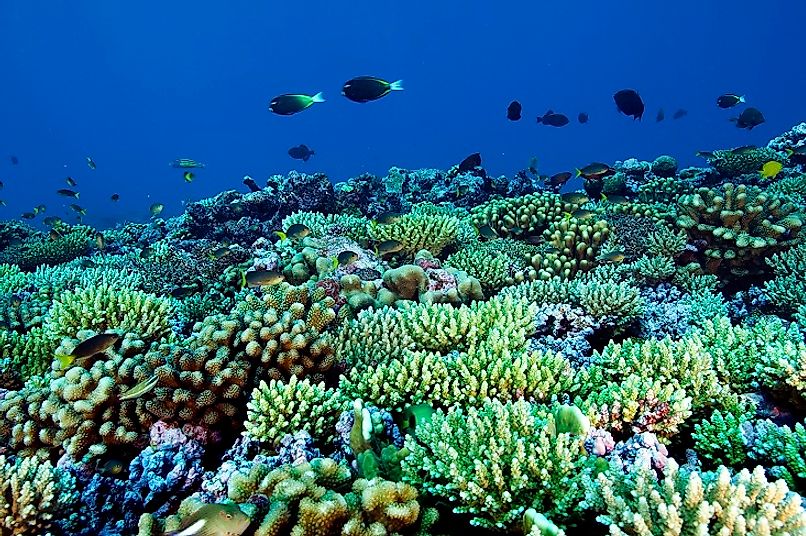
The Phoenix Islands Protected Area, located in Kiribati in the Pacific Ocean, is the largest UNESCO World Heritage Site in the world. It covers over 408,000 square kilometres—that’s more than four times the size of Iceland!
It’s one of the most pristine marine environments on Earth, home to endangered species, untouched coral reefs, and deep-sea ecosystems. Access is extremely limited due to its protected status—but its scale and biodiversity are astonishing.
8. Europe’s Most Visited UNESCO Site Is in Paris
You might expect the Eiffel Tower or the Arc de Triomphe to take the crown, but it’s actually the Banks of the Seine that hold UNESCO status and is the most visited. Technically, guessing the Eiffel Tower would be right though, since it’s included in the ‘Banks of the Seine’ UNESCO World Heritage Site.
This World Heritage Site stretches through central Paris, from the Louvre to the Eiffel Tower, encompassing bridges, historic buildings, and iconic views. Many of Paris’ most famous buildings are encompassed in this UNESCO site, including Notre Dame de Paris Cathedral, La Sainte-Chapelle, Pont des Arts, Petit Palais, and so much more.
.nightlife-box { background-color: #fff2b3; /* Light yellow colour */ border-radius: 15px; /* Rounded edges */ padding: 20px; max-width: 500px; /* Limit width to 500px */ margin: 20px auto; /* Centre the box */ font-family: Arial, sans-serif; text-align: center; box-shadow: 0 2px 4px rgba(0, 0, 0, 0.1); /* Subtle shadow for depth */ } .nightlife-box p { font-size: 16px; color: #333; /* Dark grey text */ margin: 0; line-height: 1.5; } .nightlife-box a { color: #d4a017; /* Dark yellow for the link */ font-weight: bold; text-decoration: none; border-bottom: 1px solid transparent; transition: border-bottom 0.3s, color 0.3s; } .nightlife-box a:hover { border-bottom: 1px solid #d4a017; /* Underline effect on hover */ color: #b3860b; /* Darker yellow on hover */ }Looking for the most beautiful places in Paris? Check out my article on the most Instagrammable places in Paris!
It was inscribed in 1991 as a perfect example of urban evolution over centuries. The best way to experience it? A sunset cruise on the Seine—or a picnic beneath Pont Alexandre III.

9. Sites Can Be Removed, And This Was The First 🚫
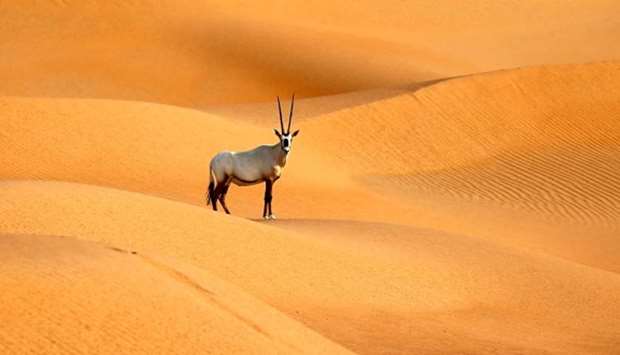
In 2007, Oman’s Arabian Oryx Sanctuary became the first UNESCO site to ever be removed from the list. The site lost its status after the Omani government reduced its size by 90 per cent, following the discovery of oil.
Conservation efforts collapsed, poaching surged, and the Arabian oryx nearly disappeared. This is a stark reminder that World Heritage status isn’t permanent—protecting these places matters.
10. Nine Cities Are Entirely UNESCO Sites 🏛️
A total of nine cities are completely inscribed on the World Heritage List. These are:
- City of Bath (UK)
- Venice and its Lagoon (Italy)
- City of Quito (Ecuador)
- Island of Mozambique (Mozambique)
- City of Potosí (Bolivia)
- City of Valletta (Malta)
- City of Verona (Italy)
- City of Cuzco (Peru)
- City of Safranbolu (Turkey)
In these cities, the entire urban landscape is considered a cultural treasure—from alleyways and bridges to architecture and layout.
I feel honoured to have lived in one (Bath) during my university time! Saying I lived in a UNESCO World Heritage Site for four years just sounds pretty cool, right?

11. Some Sites Are Incredibly Remote! 🧭
Some sites are so remote you’ll need serious dedication to visit!
Take Easter Island, or Rapa Nui, for example: one of the most remote inhabited islands on the planet. Located over 3,500 kilometres off the coast of Chile, it’s home to the iconic moai statues, carved by the island’s Polynesian settlers. Visiting feels like stepping into another world entirely, with rugged coastlines, volcanic craters and a history shrouded in mystery.
Then there’s Henderson Island, one of the most untouched atolls in the South Pacific and part of the Pitcairn Islands (which is home to a population of just 50). Few people will ever set foot on this uninhabited island, which is exactly why it’s such a precious ecosystem—almost entirely free from human interference.
Even further flung are the Gough and Inaccessible Islands, in the South Atlantic. These wild, windswept islands are part of the UK overseas territory of St Helena, Ascension and Tristan de Cunha, and they are a vital breeding ground for seabirds like the endangered Tristan albatross. The name ‘Inaccessible Islands’ really does describe quite how remote and hard to reach these islands are!

12. And Some Sites Can’t Be Visited At All! 🚫
Some UNESCO World Heritage Sites are almost impossible, or COMPLETELY impossible, to visit as a member of the public.
Surtsey Island in Iceland is a volcanic island formed in 1963, used only for scientific research. It’s completely off-limits to the public and only accessible to scientists on research expeditions.
Bikini Atoll in the Marshall Islands was a Cold War nuclear testing site. While it is now safe to visit, few people do as it’s incredibly complex to do so. There used to be flights and boat trips here, but they aren’t run any longer, so while it’s not explicitly off-limits to tourists, the logistics of getting there make it so it might as well be.
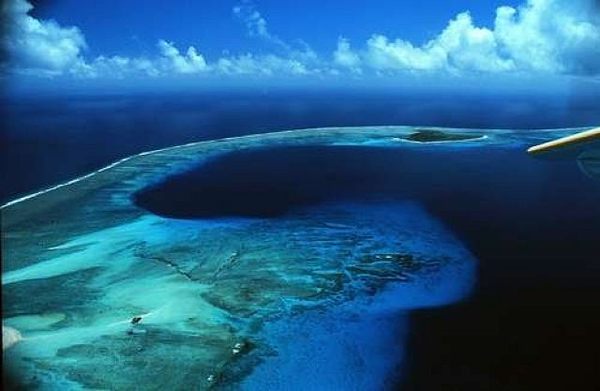
Papahānaumokuākea, part of Hawaii, is one of the largest marine conservation areas in the world. You’ll need a very good reason (and permit) to visit. There are no regular ships that visit here, and you’ll need a government permit to do so. There are flights to reach the islands, but they tend to go only once or twice and year and for military history reasons only.
The Complex of Koguryo Tombs in North Korea is technically accessible to tourists, but realistically out of reach for most due to, well, being in North Korea. Visiting North Korea is tricky enough as it is (and absolutely impossible for certain nationalities), so visiting one of their three UNESCO sites is definitely not the easiest. Their other two inscribed sites are the Historic Monuments and Sites in Kaesong, and Mount Kumgang – Diamond Mountain from the Sea, although this last one does actually have officially run tours visiting it. Prior to 2008, you could visit Mount Kumgang from the South Korean side, but after a South Korean tourist was shot and killed while walking on the beach area, all tours from South Korea were stopped and have not been restarted.

13. UNESCO World Heritage Sites Cross Borders, And Even Continents!
A total of 51 World Heritage Sites cross national borders. Some even span continents!
There are two World Heritage Sites that are contiguous and cross a continental border (although this is somewhat theoretical, as many people consider eastern Russia to be part of Asia anyway). Even so, these two sites are Uvs Nuur Basin and Landscapes of Dauria, shared by Mongolia and Russia.

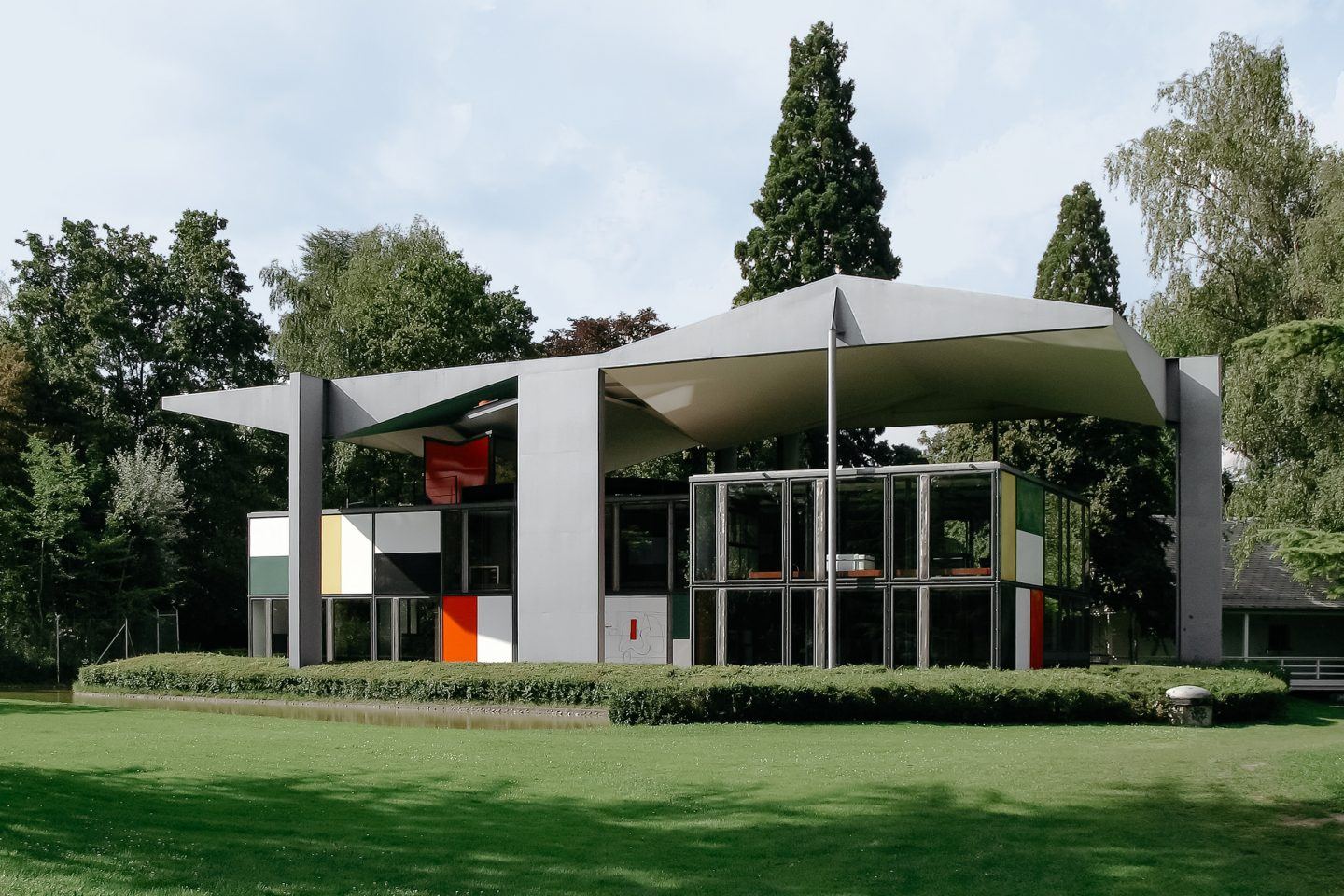
The other World Heritage Site to span continents is the cultural site of The Architectural Work of Le Corbusier. This site is a little different, as it encompasses 17 sites that are spread over seven countries (Argentina, France, India, Switzerland, Belgium, Germany and Japan).
The Architectural Work of Le Corbusier isn’t just about buildings — it’s about bold ideas that changed the way we live and design our spaces. Between the 1910s and 1960s, this group of 20th-century works helped spark the Modern Movement, a revolutionary way of thinking about architecture that was all about innovation, human needs and reimagining the future.
Across continents, these buildings spread a new language of architecture. They include Villa Savoye in France, an icon of minimal, functional design, as well as Unité d’Habitation in Marseille, which rewrote the rules of urban living. There’s also Maison Guiette, which spurred the development of the Modern Movement in Belgium and the Netherlands.
Together, these spaces form a global blueprint for modern living. They’ve influenced architecture across the world and continue to inspire the cities we live in today.
14. The Smallest World Heritage Sites: Tiny but Mighty!
Not all World Heritage Sites are vast. The Holy Trinity Column in Olomouc, Czech Republic, is one of the smallest cultural sites. Built in the early 1700s, it’s a beautiful Baroque column celebrating Christian faith and artistry.
The smallest natural site is Vallée de Mai, a lush palm forest on Praslin Island in the Seychelles. It’s home to the rare coco de mer palm and several endemic bird species. You can walk its trails in under an hour—but the biodiversity is world-class.

15. UNESCO World Heritage Sites Aren’t Just Landmarks: There’s Intangible Heritage Too 🍕
When we think of UNESCO, we usually picture iconic landmarks like Machu Picchu or the Taj Mahal. But one of the most interesting facts about UNESCO World Heritage Sites is that not all of them are physical places. Some are intangible—traditions, rituals, and living practices passed down through generations.
These are the stories, flavours and experiences of culture that can’t be boxed in by bricks or borders.
One of the most famous intangible cultural heritage listings? Neapolitan pizza-making in Naples. The art of the pizzaiolo—spinning dough, using wood-fired ovens, and keeping traditions alive—was officially recognised by UNESCO in 2017. It’s not just food, it’s culture!

Some of the most delicious and dynamic examples include:
- Tango in Argentina and Uruguay
- Sauna culture in Finland
- Flamenco dancing in Spain
- Washoku, traditional Japanese cuisine
- The ancient traditional Qvevri wine-making method in Georgia
- Batik fabric dying in Indonesia
- Il-Ftira, the culinary art and culture of flattened sourdough bread in Malta
- Mariachi music in Mexico
- Argan, practices and know-how concerning the argan tree in Morocco
- Arabic coffee, a “symbol of generosity”, in Oman, Qatar, Saudi Arabia and the United Arab Emirates
These forms of heritage are protected not for their architecture but for their role in passing down culture, community and identity.

UNESCO World Heritage Sites aren’t just impressive places — they’re places that carry weight. Some are hidden, some are fragile, and they are all fiercely protected. They remind us that not everything amazing is a “top 10” tourist spot, and that the stories behind the sites can be just as inspiring as the places themselves. There are so many places on the List of UNESCO World Heritage Sites that I would never have heard of without reading through the list, and it’s honestly astounding just how much beauty and significance we have in this world of ours.
Which of these facts surprised you most? Or have you been to any of these incredible places?